
The Core. The New Lands.
A realm to make your own.
Learn the shape of the current Crownlands world, then open the in-game atlas for its active maps, holdings, and live ownership.
The Core
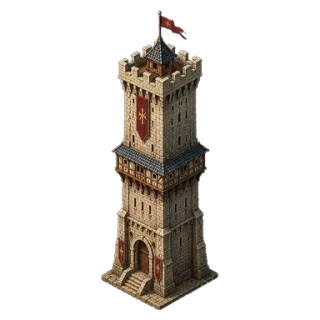
Twenty-five permanent Core maps form the strategic heart of the realm. Strongholds, four Clan Towers, and the Crown Citadel reward preparation and coordinated defense. New rulers begin in the New Lands rather than the Core.
The heart of the campaign
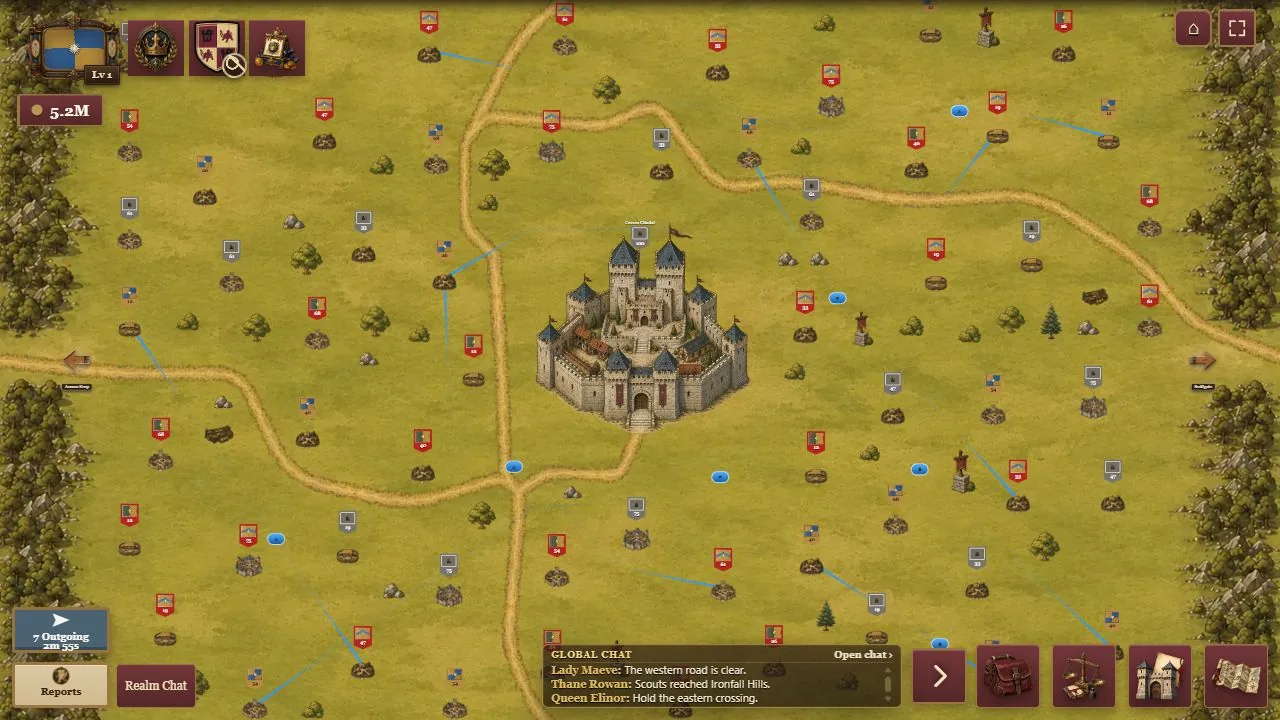
The Core is a permanent five-by-five grid of 25 maps. It contains the central Crown Citadel, specialized Strongholds, camps, and four Clan Towers. Rulers move toward it from the New Lands as their armies, allies, and production become ready for larger objectives.
Nine Core maps cannot host a player's Main City: Stoneward, Greybanner Hold, Lionwatch, Swiftgate, Crown Citadel, Aurum Keep, Oakwatch, Ironwatch and Roseguard. A city can still matter as a staging point or ordinary holding without being eligible as your Main City. Use the in-game move controls to check the actual destination rules.
A frontier that grows with the realm
Players in the active season share one realm. Starting capacity expands into the New Lands; crossing a population threshold does not split friends into separate player worlds.
The first New Lands ring contains 24 maps surrounding the Core. Further New Lands activate as the realm needs starting capacity. Northgate March, Frostmere, Highwatch Vale, and Ravenstone are examples from the first ring.
Only activated maps are playable. Prepared artwork or a future ring is not proof that a route is open. Rather than promising a permanently fixed map count, this guide describes the structure; the in-game atlas shows the frontier available to your current realm.
Follow roads across connected maps
Regional edges join through active reciprocal connections. Your army's accepted route determines its journey, including the maps crossed along the way. Opening another map does not abandon cities you own elsewhere.
For a campaign, identify a suitable source city, scout the destination, and inspect the actual Travel time. A fast army still needs a valid road network. Your reinforcements and returning forces also need time to travel.
Choose your reason to hold ground
Camps provide finite rewards after an eligible hold. Strongholds improve a strategic part of your kingdom or clan. Clan Towers belong to a clan and use their own shared garrison and construction rules. The Crown Citadel records its rulers in a cumulative Reign Ledger.
These differences matter more than how impressive an icon looks. Compare the reward, defenses, travel, and support you can sustain. A distant victory may be expensive to keep if your clan cannot reinforce it.
Plan your first route toward the center
- Locate your Main City in the New Lands.
- Review nearby cities and connected routes.
- Build a useful production and troop reserve.
- Scout the objective or holding that fits your next step.
- Coordinate support before committing to a distant position.
The world is shared and continues changing while you are away. Check ownership, reports, and arriving armies before acting on an old plan.